Piano lessons in Terrebonne for children, teens and adults
The piano is one of the few things that manages to bring everyone together, no matter where they come from. You can learn music at 6 years old with all the energy of the gang, or take it up at 46 between two meetings at the office, and come back to it at 76 just for the fun of playing tunes that warm the heart.
In a school like "Garage à musique", the goal isn't to churn out virtuosos. It's to build a clear, motivating, and realistic path, where technique is there to help you play, and where each student ultimately finds the sound that truly reflects them.
Why take piano lessons?
Piano playing is often associated with reading sheet music and discipline, but practice touches on several dimensions at once.
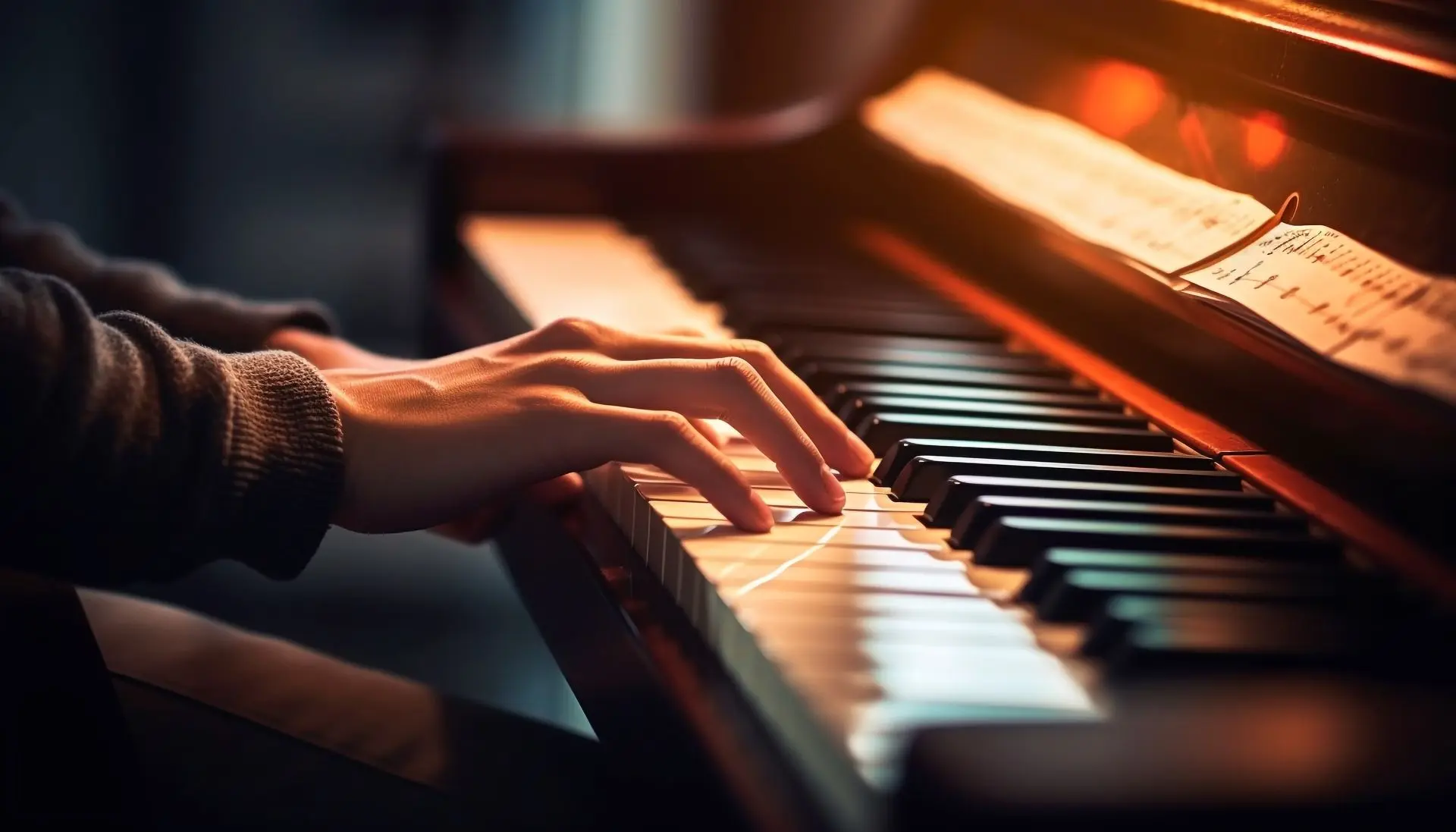
Active concentration
Both hands perform different tasks, the ear constantly compares, and attention alternates between detail and the big picture. This combination fosters a form of active concentration, highly transferable to everyday life.
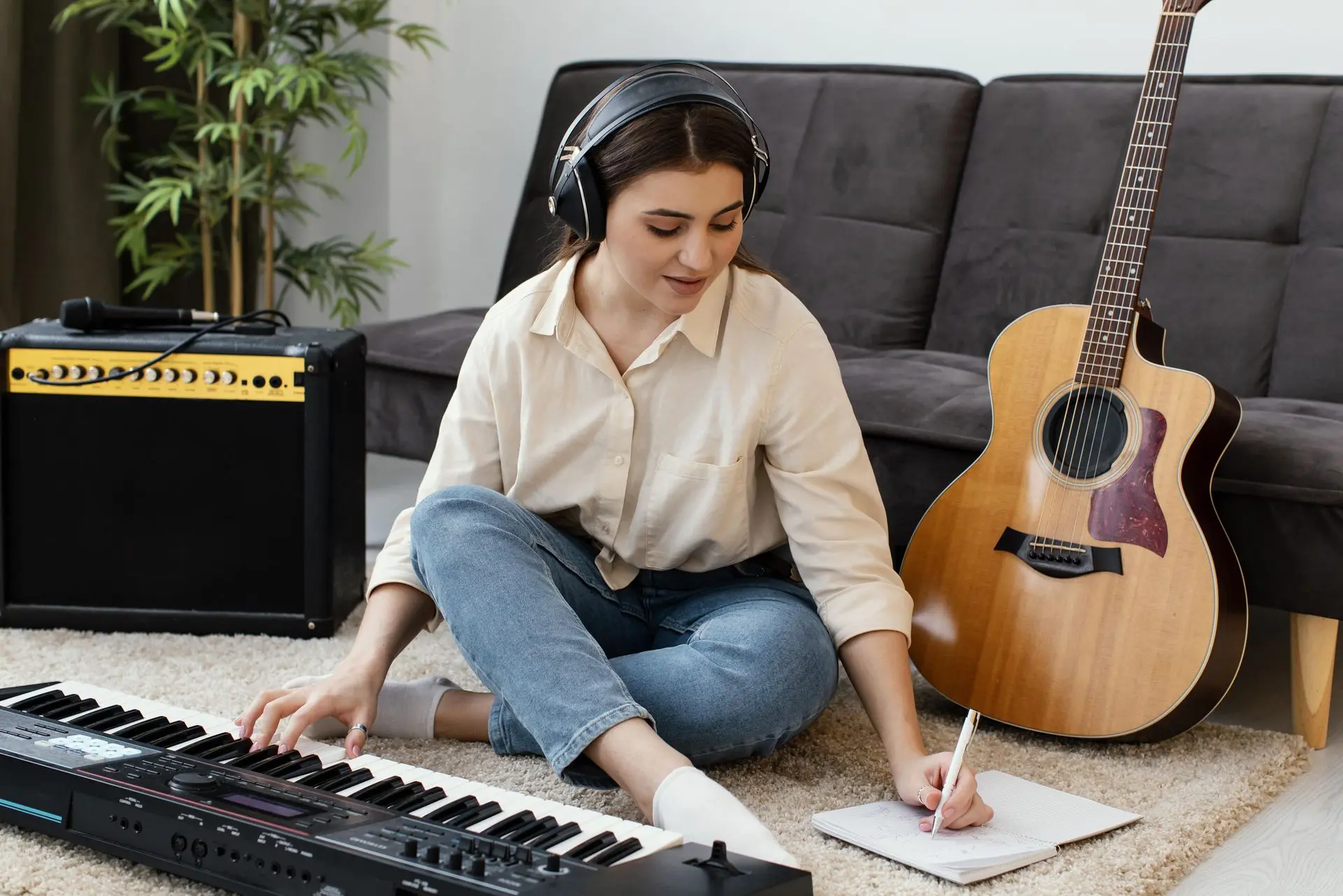
Creativity
The piano also fosters creativity, even in people who consider themselves "not creative." Changing the end of a musical phrase, inventing a short introduction, improvising on three chords—all of this counts. Progress becomes tangible: you hear the difference week after week.
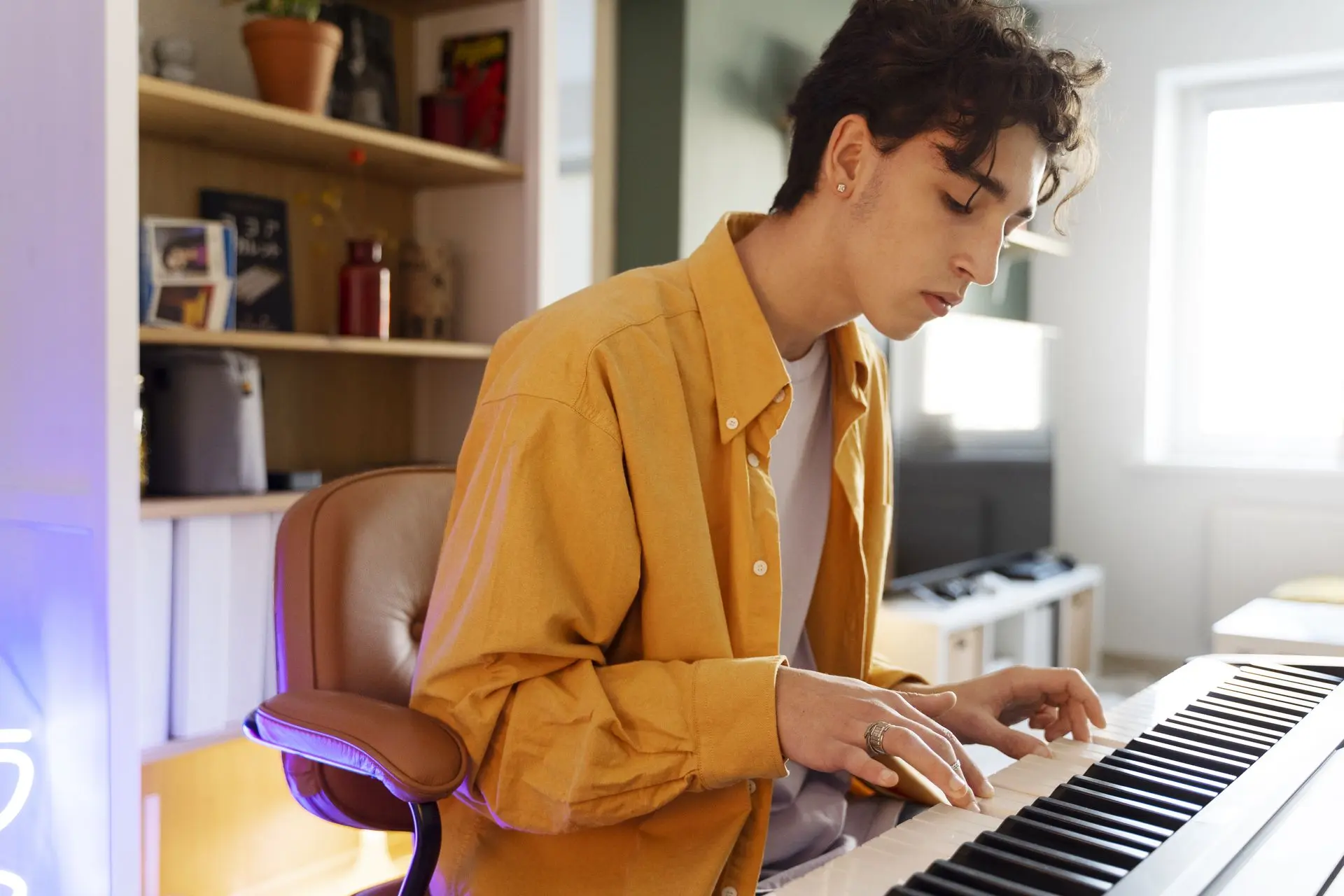
Mastery
After a few months, many students note simple and concrete gains: more stable posture, more precise movements, better coordination, and a calm confidence when it comes time to play in front of someone, even just one person in the living room.
Les leçons de piano à Terrebonne au Garage à Musique proposent justement de toucher à toutes ces dimensions à travers une pédagogie déjà éprouvée par des professeurs expérimentés.
Piano lessons by age group: what really changes
Les cours de piano respectent des besoins distincts: rapport au jeu, capacité d’abstraction, rythme de vie, motivation, et même tolérance à l’erreur.
Children
Learning through experience is often the most effective approach: the instrument is played early, notes are associated with concrete reference points, movement is encouraged, singing is encouraged, and repetition is facilitated without feeling forced. The group setting can be a powerful motivator: seeing another child successfully complete a rhythmic pattern inspires one to try it, and then to persevere.
Teenagers
We can keep this dimension alive while adding a clearer structure. It's an age when musical identity forms quickly: styles, artists, soundtracks, video games. A music course that incorporates these references, while introducing solid foundations (rhythm, reading, chords), has a good chance of lasting.
Adults
The main challenge isn't ability, but rather scheduling and mental fatigue. When the lesson starts with a personal goal (playing a film theme, accompanying a song, getting back into classical music), engagement becomes more stable. Theory then serves the objective, at the right time, without turning the session into a lecture.
For older adults, progress is best when it is gentle, steady, and rewarding. Musical memory and the ability to learn remain intact; what changes is the need for time, physical comfort, and a supportive environment. The piano can then become a moment of self-reflection as much as a learning experience.
Cours de piano : la méthode efficace
L'école du Garage à Musique propose des services d'enseignement du piano adaptés aux besoins de chaque élève. Bien que les cours collectifs (cours de piano en groupe) ne soient pas offerts actuellement, l'apprentissage du piano permet de normaliser l'erreur, d'apprendre à écouter et de se synchroniser. Pour les enfants, c'est une manière de rester en action et de développer leur sens musical de façon structurée.
Un encadrement de qualité fait émerger des compétences musicales et sociales : écouter une consigne, observer, s'encourager et reprendre après une difficulté. Ce sont des apprentissages qui s'installent progressivement durant le parcours de l'élève.
Au Garage à Musique, l'objectif est de faire en sorte que chaque apprenti musicien puisse s'épanouir dans sa pratique. Nous vous invitons à consulter les créneaux disponibles pour les cours de piano dès à présent afin de trouver le moment qui vous convient le mieux.
How much does a piano lesson cost in Terrebonne?
Le prix d’un cours de piano à Terrebonne varie principalement selon le temps de cours, le nombre de cours et la taille du groupe. En moyenne, un cours individuel se situe entre 45 et 60 $ CAD de l’heure.
| Type de cours | Format | Prix moyen (CAD / heure) |
| Cours individuel | 1 élève | 45 – 60 $ |
| Cours individuel à domicile | 1 élève | 60 – 80 $ |
*Please note that these prices are guidelines and may vary depending on the music school and its needs.
| Au Garage à musique pour la session automne 2026 | 4 cours | Session de 12 cours (13 à la douzaine) |
30 minutes | 120$ (30$/ cours) | 336$ (28$/ cours) + 1 cours gratuit à la fin |
60 minutes | 220$ (55$/ cours) | 576$ (48$/ cours) + 1 cours gratuit à la fin |
Unité | 60$ de l’heure | N.B.: Aucun cours gratuit si à l’unité. |
Vous pouvez faire votre demande d'inscription dès à présent auprès de notre équipe.
How to achieve a good balance between technical skill, theory, and enjoyment in teaching
Piano technique isn't a collection of isolated exercises; it's a language of the body. Wrist position, relaxation, thumb movement, finger independence: these elements take shape when they serve a concrete musical phrase. Mature teaching therefore alternates between micro-work (a single gesture) and music (a piece). Theory, for its part, benefits from being introduced "just in time." Reading a measure in 3/4 time when playing a waltz, recognizing a minor chord when accompanying a song, understanding the key of a favorite theme. Abstraction then becomes useful, and often enjoyable.
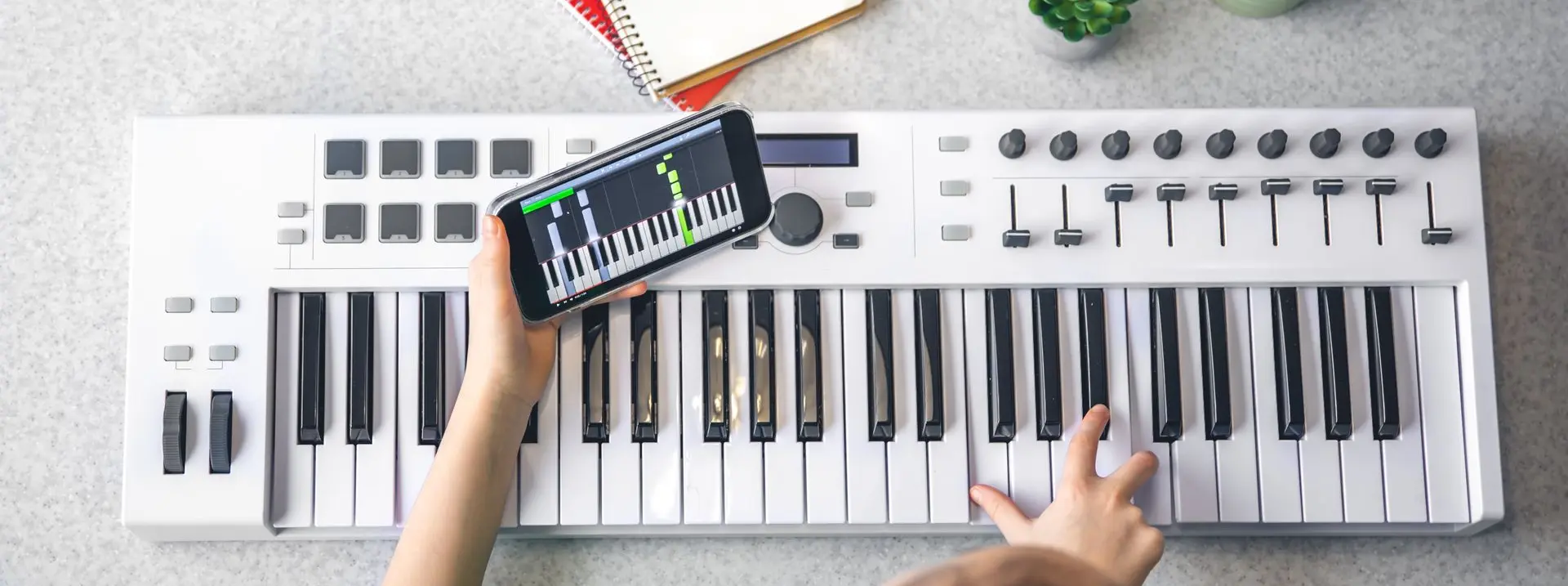
Some schools also add a creative component, even for beginners: variation, guided improvisation, two-measure composition. This isn't just a decorative extra. It's a direct way to learn music: you listen, you anticipate, you choose, you adjust. It's exactly the same at Garage à Musique, where the teachers teach you good habits from A to Z, starting with the very first lesson and continuing until they become second nature! Located in Terrebonne, Garage à Musique welcomes students from all over the region.
- Lanaudière
- Basses-Laurentides
- Montréal
Access is easy and you can now make your booking requests.
Conclusion: a harmonious routine with the piano
You don't need military discipline to make progress, but you do need a clear schedule. A flexible, stable, and realistic plan is worth more than an ambitious plan that's abandoned after two weeks.
A few minutes are enough to keep your hands active, especially at the beginning. The real secret is to make the first action easy: open the keyboard, sit down, breathe, play something familiar, and then move on to the day's work.
And if a week is chaotic, the piano can remain an anchor point: a place to which one returns, without judging oneself, with the simple satisfaction of adding one more note over time.